
Jerry Summers
Much has been written about the 1899 Sewanee “Iron Men” football team and its five victories in six days on a whirlwind train trip of 2,300 miles across the South to beat, Texas, Texas A&M, Tulane, Louisiana State and Mississippi en route to a 12-0 record and scoring 322 points to the opponents' 10. The Tigers from the little school on the Cumberland Plateau have been voted the Greatest Football Team of All Time in polls and articles.
Tony Barnhart in his book, Southern Fried Football: The History, Passion of Glory of the Great Southern Game listed Sewanee as his number 1 Southern football team of all time. In College Football Hall of Fame’s March of the Gridiron Champions, a hypothetical 16-team playoff was held to determine the best team in college football by a fan vote.
Although Sewanee was initially the number 16 ranked team, its supporters quickly routed the opposition with overwhelming Facebook votes to defeat Alabama (1961), Nebraska (1971) Notre Dame (1947) and Oklahoma (1974) teams to be ranked number 1.
Who was responsible for the 1899 team record of an undefeated season and the trip to football immortality? The original idea arose out of a disagreement over gate receipts with traditional rival Vanderbilt University that resulted in the 1899 game being cancelled. Luke Lea was the 20-year-old team manager. He is credited with coming up with the novel idea of scheduling the five game trip across the Southland.
In a 2019 Article in the New York Times by Ray Giler, Lea is credited with leading Sewanee as “one of the first forward thinkers of Southern Football.” Lea was also considered the first to come up with the idea of having trainers on road trips to take care of its players and massage their weary legs back into playing shape.
Luke Lea was born on April 12, 1879 in Nashville, Tennessee and was home schooled by tutors until he went to Sewanee and graduated in 1899 with a bachelor’s degree. He then received a master’s degree in 1900. He next attended Columbia University in New York City and earned a law degree in 1903 and then returned to his home town of Nashville to start his law practice.
Always an entrepreneur, Lea also formed a company to purchase the local newspaper the Nashville American and renamed it the Nashville Tennessean. In addition to practicing law, he served as the newspaper’s first editor and publisher and took a strong position in supporting Prohibition. A leading Democrat, Lea was elected to the United States Senate in 1911 by the Tennessee General Assembly. The legislature was unable to decide on one candidate and, after 10 unsuccessful ballots, Lea was introduced as a compromise choice and was selected on the 11th ballot.
While serving as a Senator, he favored President Woodrow Wilson’s progressive program of legislation. Lea’s political philosophy was as a social progressive but fiscally conservative Democrat. During his term of office the Seventeenth Amendment was passed which changed the way members of Congress were elected by taking the authority away from the state legislatures and placing the elections in the hands of the voting public. As a result Lea was defeated by Kenneth McKellar, colleague of Memphis political boss E. H. Crump (the Red Snapper).
When World War I broke out at the end of his Senate term, Lea joined the United States Army as a volunteer although he had opposed United States involvement in the European conflict. He raised a volunteer Field Artillery Regiment and served as its commander with a rank of Colonel. In that capacity Lea was awarded the Army Distinguished Service Medal for his wartime service.
In a rather bizarre incident, Lea and a group of six officers and sergeants went to the Netherlands in an attempt to kidnap Kaiser Wilhelm II and take him to the Paris Peace Conference for trial for war crimes. This coup failed and the group had to flee the country without the Kaiser. An Army investigation resulted in Lea and his group being reprimanded.
After the war Lea returned to Nashville and resumed operation of his paper as well as being involved in banking and real estate businesses. Unfortunately in the 1920s he became a major investor in the Nashville investment banking firm of Caldwell and Company as a result of his prior friendship with its founder Roger Caldwell. Charges of corruption in the firm were made and Lea was indicted in North Carolina for bank fraud arising from the collapse of a bank in Asheville in 1930.
Lea was convicted of three of seven counts with his son and, after their appeals were denied, they reported to prison in May 1934. He received a parole in April 1936 and was finally pardoned by the President in June 1937. Lea claimed that he was wrongly prosecuted and was a victim of a political prosecution by Republicans in North Carolina and Tennessee.
The former Sewanee team manager died on November 18, 1945 at Vanderbilt University Hospital in Nashville and is buried in Mount Olive Cemetery. Perhaps his greatest overall accomplishment was the undefeated season of the Sewanee “Ironmen”.
* * *
Jerry Summers
(If you have additional information about one of Mr. Summers' articles or have suggestions or ideas about a future Chattanooga area historical piece, please contact Mr. Summers at jsummers@summersfirm.com)
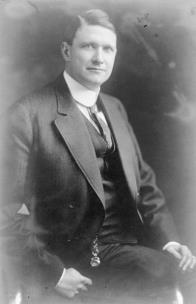
Luke Lea